• Doorstep car service across Lahore
  • A technician comes to your home, your office or your parking bay
  • Itemised estimate approved before any work starts
  • Written checklist and photographs after every visit
  • Old parts left out for you to inspect

Case studies

How a fault actually gets found

Each study below runs in the same order the work does: what the driver reported, what the readings showed, what was replaced, and what changed afterwards. They are worked examples rather than records of customer jobs, written to show the method - including the times a test clears the expensive part instead of condemning it.
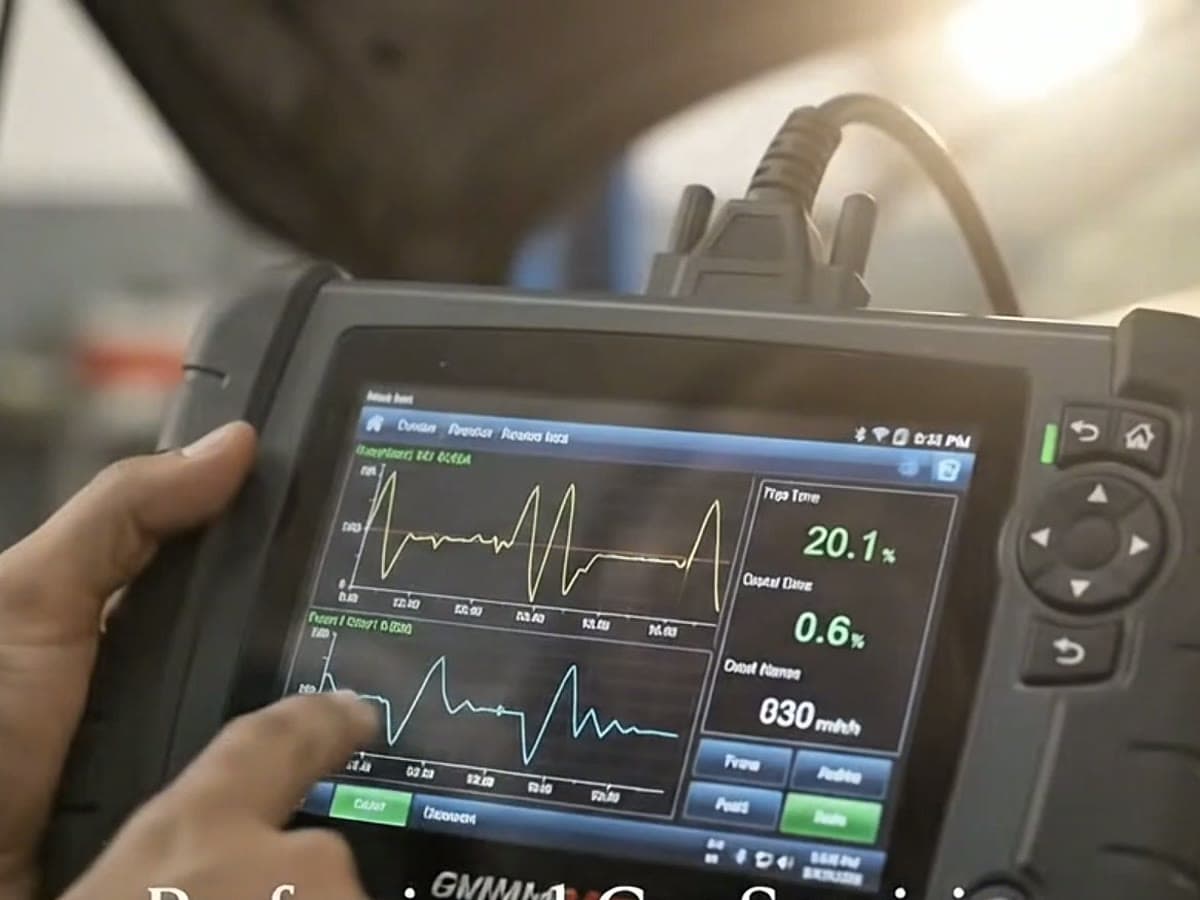
A diagnostic tablet showing live sensor traces during a fault-finding session

Worked examples

Different systems, the same sequence

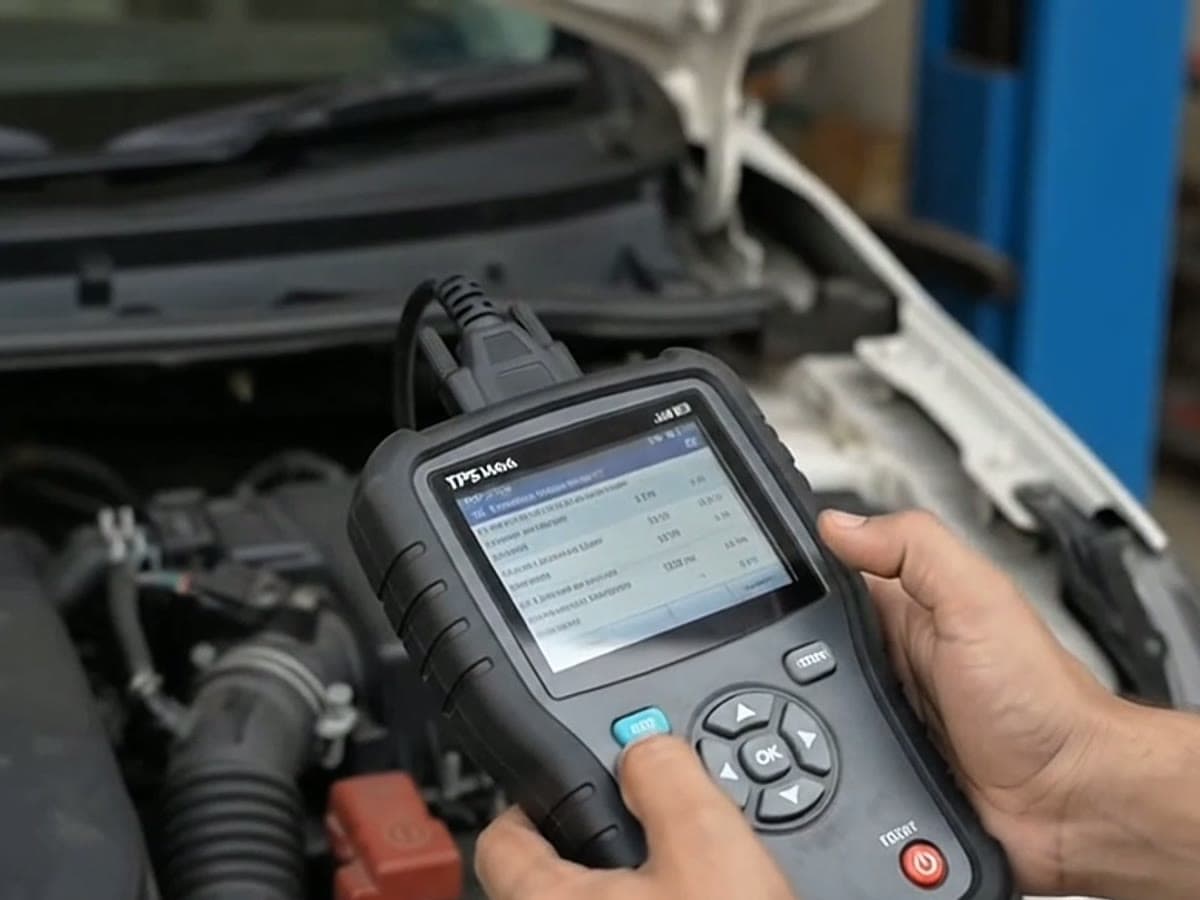
Different tools too - a scanner, a micrometer, a paint gauge, a multimeter. What they have in common is that something was measured before anything was replaced, and that the expensive part was reported healthy whenever it was.
Honda City, 1.3 petrolSample

A lean-running code that was not the oxygen sensor

Symptom
Check engine lamp on, an idle that hunted up and down when cold, and fuel consumption up by roughly a litre per hundred kilometres. The owner already had a quote for an oxygen sensor from somewhere else.
What the testing showed
The stored code was P0171, system too lean on bank 1, and the freeze-frame showed it had set at idle rather than under load. Live data put short-term fuel trim at plus 24 per cent at idle, falling to about plus 6 per cent at 2,500 rpm. That pattern is unmetered air getting in after the airflow sensor - a tired oxygen sensor skews trims across the whole load range instead of collapsing as airflow rises. A smoke test through the intake showed vapour escaping from a perished elbow on the brake servo hose.
Work carried out
Brake servo vacuum hose renewed, the PCV hose and intake ducting checked for further leaks at the same time, and the smoke test repeated to confirm the system held.

Outcome

Fuel trims came back to within a few per cent at idle and at raised engine speed, the monitors completed and the lamp stayed off. The oxygen sensor was tested, found to be switching normally, and left on the car.
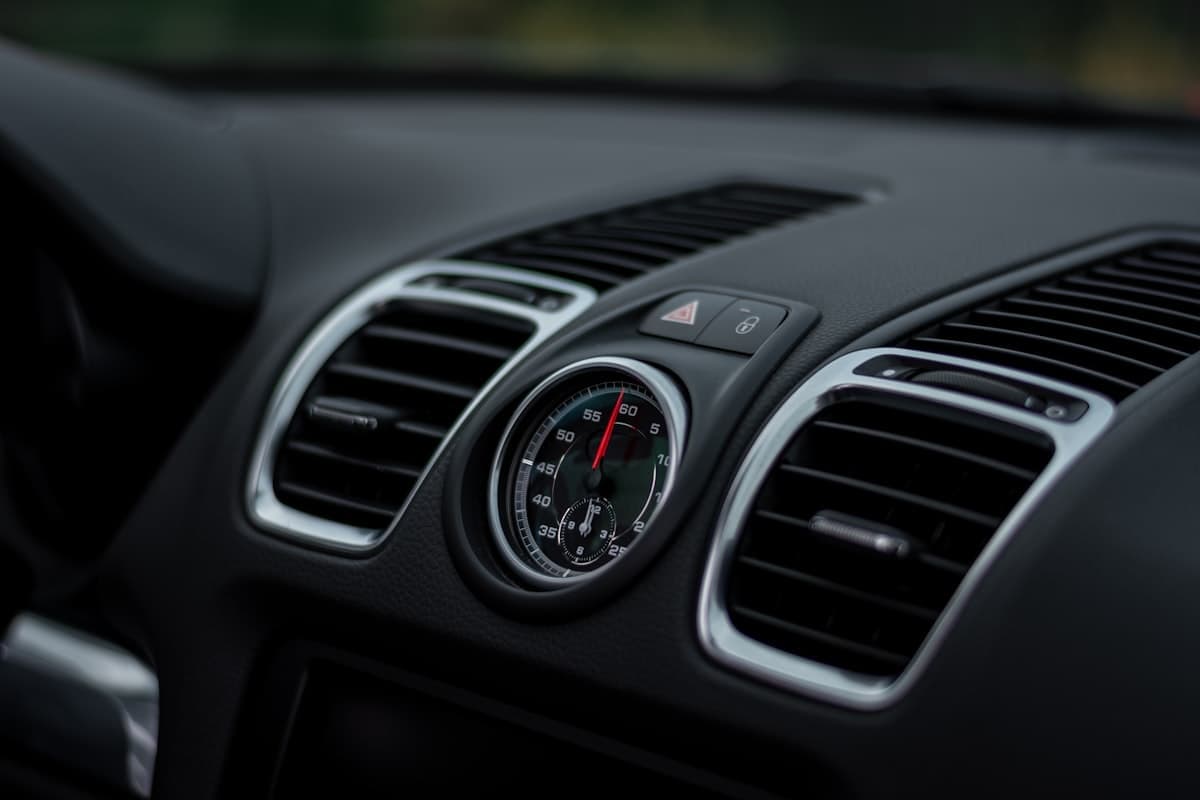
Hyundai Tucson, petrolSample

Cold on the move, warm in traffic - and the gas was fine

Symptom
Air blew properly cold on the motorway and went lukewarm within a couple of minutes in stop-start traffic. The system had been topped up twice in the previous year.
What the testing showed
Vent temperature measured 7°C at a steady 2,000 rpm and climbed past 20°C at idle, while high-side pressure rose sharply as soon as the car stopped moving. That is a condenser airflow problem, not a charge problem: at speed the car rams air through the condenser, and in traffic the fan has to do that job. With the engine idling and the air conditioning on, the condenser fan was not turning. Back-probing the fan connector found supply and earth present with the motor drawing no current, and the condenser face was packed with dust and insect debris.
Work carried out
Condenser fan motor replaced after its fuse and relay were checked, and the condenser face cleaned from the engine side outwards so the debris came back out the way it went in. The charge was recovered, weighed, found to be within specification and returned to the system.

Outcome

High-side pressure settled at idle and vent temperature held in single figures with the car stationary. No refrigerant was sold, because none was missing.

Toyota Corolla, 1.6 petrolSample

A battery that kept going flat, isolated fuse by fuse

Symptom
Flat every third or fourth morning after standing overnight, but starting and driving normally once jumped. Two batteries had been fitted in eighteen months.
What the testing showed
The fitted battery passed a load test at 76 per cent state of health, and the alternator held 14.2 volts at idle with headlights and blower running, so neither was the cause. With everything closed and the modules given forty minutes to go to sleep, current draw measured 470 milliamps against the 30 to 50 milliamps a car of this age should settle at. Pulling fuses one at a time dropped the draw to 28 milliamps at the circuit feeding an aftermarket head unit, which had been wired to a permanent live rather than the switched supply, so its amplifier never powered down.
Work carried out
The head unit was rewired to the correct switched feed, with a separate fused permanent line kept only for the memory circuit. The joint was remade as a crimped and insulated connection instead of twisted tape, and the loom was secured clear of the steering column.

Outcome

Sleep draw settled at 28 milliamps and the car held its charge across a weekend of standing. A third battery was not sold, because the battery was never the fault.

KIA SportageSample

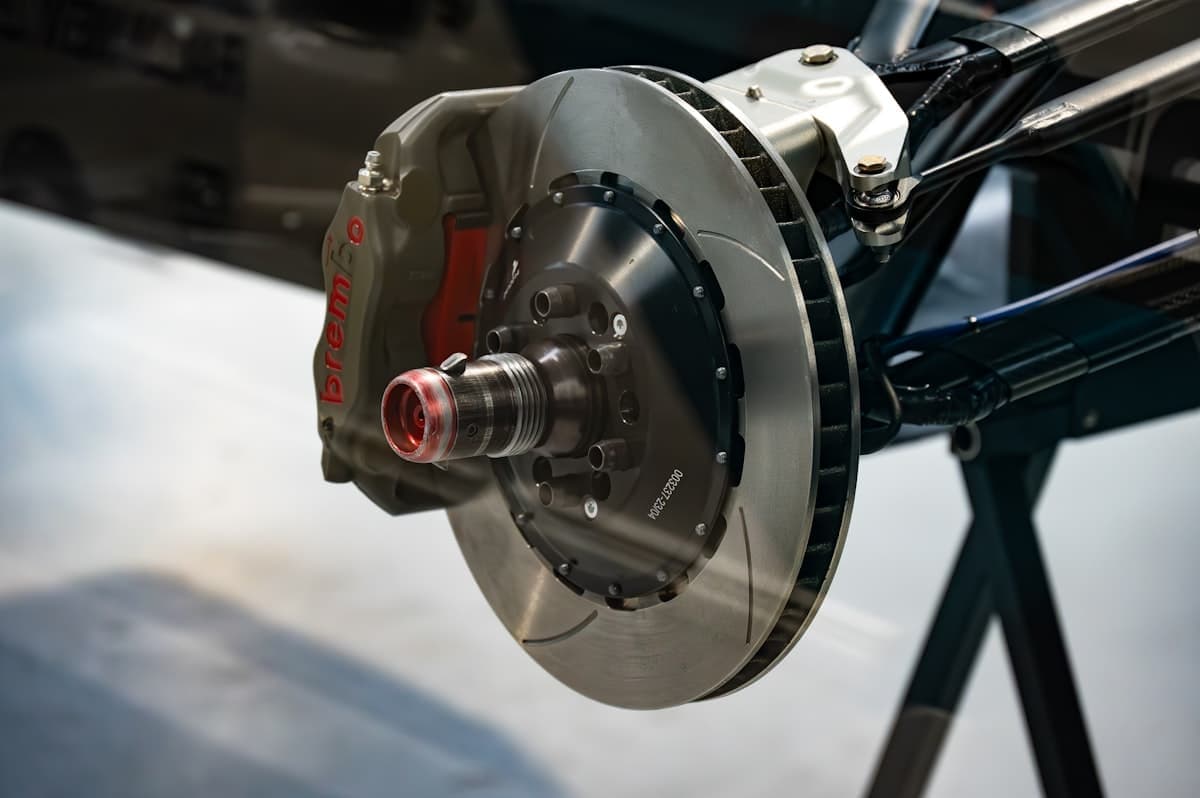
Brake judder measured rather than guessed

Symptom
A pulse through the pedal and the steering wheel when braking from highway speed, with nothing noticeable at low speed. Pads had been replaced elsewhere four months earlier.
What the testing showed
Front pad friction material measured 8.2 mm, so the pads were not the story. Disc thickness was taken at eight points around each front disc with a micrometer: the near side varied by 0.04 mm between its thickest and thinnest point, against a manufacturer limit of 0.015 mm. Runout measured with a dial gauge was inside tolerance, and both hub faces carried a ring of corrosion that the discs had been clamped over at the previous repair.
Work carried out
Front discs renewed as a pair with new friction material bedded to the fresh surfaces, hub faces cleaned back to bare metal before fitting, and wheel bolts tightened in a star pattern to the specified torque with a torque wrench rather than a rattle gun.

Outcome

The pulse went with the discs. The write-up explained why it had happened - a disc clamped over a corroded hub face never runs true, and wears unevenly from the first hundred kilometres - so the same fault does not follow the next set of pads.

Honda Civic offered for private saleSample

A tidy used car carrying 400 microns of paint down one side

Symptom
A buyer wanted an independent opinion before paying a deposit. The car presented well, the seller described it as accident-free, and the asking price sat slightly under the market.
What the testing showed
Paint depth readings ran between 95 and 130 microns across most panels, which is consistent with factory finish. The near-side rear door and quarter panel read 380 to 450 microns and the boot lid read 210. Overspray sat on the rear door seal, the seam sealer inside the near-side sill did not match the pattern on the opposite side, and the rear panel gap was around 3 mm wider at the top than the bottom. A section of the boot floor showed weld spatter under fresh underseal that the rest of the underbody did not have.
Work carried out
No repair work - this is an inspection, not a job. The visit produced a photographic report with each finding graded by severity, the repaired area mapped panel by panel with its readings, and the mechanical items listed separately: tyre ages and tread, brake material, fluid condition and stored fault codes.

Outcome

The buyer had evidence instead of an impression. Repair to the rear of a car is a legitimate reason to walk away or to reprice, and that decision stayed with the buyer, made on readings rather than on how the paint looked in the sun.

The method

Symptom, test, cause, fix

It is the thread running through every study above, and it is slower on the day than replacing the part a fault code names. It is also the reason a repair holds instead of coming back.
  1. Symptom

    What the car does, and when it does it

    Cold or warm, moving or stationary, under load or at idle. That description narrows the search before a tool comes out of the van, which is why the first questions are the ones only the driver can answer.

  2. Test

    A reading taken before anything is opened

    A fuel trim, a pressure, a voltage drop, a thickness in millimetres. The test is chosen to separate the likely causes from each other rather than to confirm the first guess.

  3. Cause

    The component the evidence actually points at

    A fault code names a circuit that reported something unexpected. Only a test names the part - and you are told which reading condemned it, so the conclusion is checkable.

  4. Fix

    Repair the cause, then prove it has gone

    The repair is verified the way it was diagnosed: trims re-read, pressures re-measured, draw re-checked. If it does not measure right afterwards, the job is not finished.

Tell us what it does. We will tell you what it is.

Describe the symptom in your own words - the noise, the smell, when it happens - and a technician comes to your address with the equipment to test it rather than guess at it.

Submitting a booking request costs nothing and charges nothing. An advisor confirms your slot before a technician is dispatched.