Wet weather does not introduce new problems so much as expose existing ones. Tyres that were adequate in the dry become marginal. Wipers you had stopped noticing turn a windscreen into frosted glass at exactly the wrong moment. The good news is that almost all of it is checkable in your own driveway in about twenty minutes.
Tyres do almost all of the work
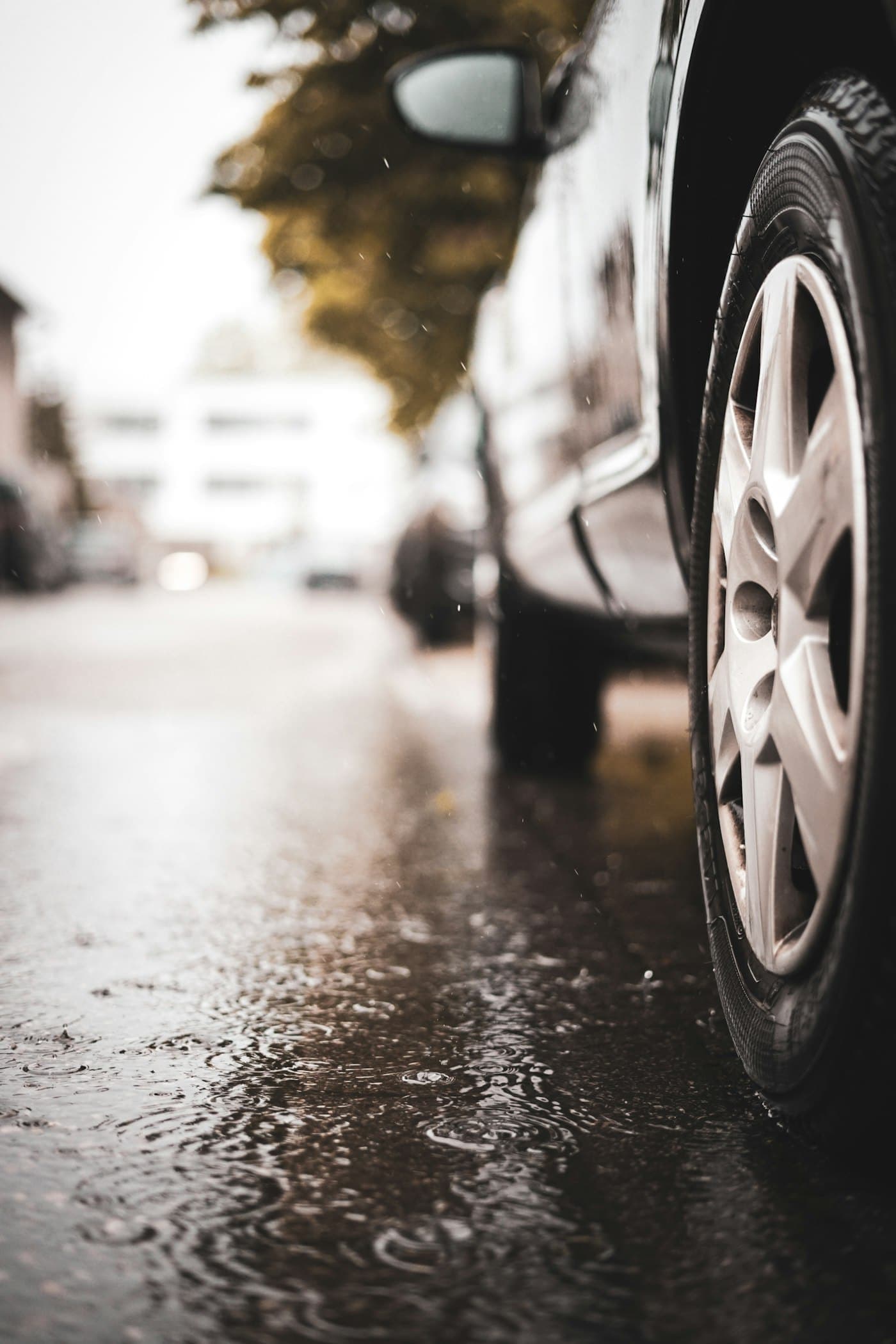
In the wet, a tyre's tread grooves have one job: move water out of the contact patch so rubber can touch road. When there is more water arriving than the grooves can clear, the tyre floats and you are aquaplaning - steering and braking both stop working, and no electronic system can help because none of them can create grip that is not there.
Tread depth is what determines how much water a tyre can clear, and the drop in wet performance as tread wears is steep - far steeper than most drivers expect. A tyre near the legal minimum performs dramatically worse in standing water than one with most of its tread remaining, even though both are legal.
- Check tread depth across the full width of each tyre, not just in the middle - uneven wear means the shallowest point is what matters.
- Check pressures cold, against the placard in the door shut or fuel flap. Under-inflation makes aquaplaning more likely.
- Check the sidewall date code. Rubber hardens with age; a tyre several years old grips less in the wet regardless of tread.
- Look for cracking, bulges or embedded objects while you are there.
Visibility: wipers, washers and glass
Wiper blades degrade so gradually that most people only notice how bad theirs are the first time it rains hard. Lift them and run a fingertip along the edge - it should be smooth and flexible, not hardened, split or ragged. Smearing, chattering or missed strips of glass all mean replacement.
The glass itself matters too. A film of road grime and old polish residue on the outside makes headlight glare far worse at night in the rain, and interior film scatters light just as effectively. Clean both sides properly, and top up the washer reservoir - you will use more than you expect.
Lights: being seen matters as much as seeing
Walk around the car with the lights on and check every one, including brake lights and indicators. Yellowed, oxidised headlight lenses can cut light output substantially, and it happens slowly enough that you adapt without noticing. If your headlights look cloudy in daylight, they are also failing you at night.
One habit worth adopting: in heavy rain, use dipped headlights rather than daytime running lights alone. On many cars the DRLs do not illuminate the tail lights, which means the driver behind sees nothing of you in spray.
Brakes behave differently in the wet
Wet discs need a moment to wipe clear before they bite fully, and stopping distances lengthen substantially on a wet surface. The practical response is more following distance - the single most effective wet-weather adjustment available, and it costs nothing.
Driving through standing water
The real risk in deep water is your engine's air intake. If water is drawn into the intake it enters the cylinders, and because water does not compress, the result is bent connecting rods or worse. This is not a maybe - it is the single most expensive mistake available on a flooded road.
- 01If you cannot see the road surface and judge the depth, do not enter. Turning around costs you time; getting it wrong costs you an engine.
- 02Where you must cross shallow water, go slowly and steadily in a low gear, keeping engine revs up to reduce the chance of water entering the exhaust.
- 03Give the vehicle ahead room to clear before you follow, so you are not driving into its bow wave.
- 04Once through, dry the brakes with gentle pressure while moving slowly.
- 05If the engine stops in water, do not attempt to restart it. That restart is what turns a recovery into a rebuild.
None of this is dramatic. It is a tyre check, a wiper check, a light check and a bit more following distance - and it is the difference between rain being an inconvenience and rain being an incident.