Brakes are the one system on your car where being wrong has no second attempt. They also degrade gradually enough that drivers adjust their behaviour without consciously registering that anything has changed - braking a little earlier, pressing a little harder. Here are the six symptoms worth acting on, and what each one is actually telling you.
1. A high-pitched squeal when braking
Most pads have a small metal wear indicator that contacts the disc when friction material runs low. It is designed to make an unpleasant noise, and it works. Take it as the intended warning: get the pads measured. Note that a light squeal on a cold, damp first application is often just surface rust being cleared and is not the same thing.
2. A grinding or metallic scraping sound
3. A soft, long or sinking pedal
A pedal that travels further than it used to, or sinks slowly under steady foot pressure, points at the hydraulic system rather than the pads. Air in the lines, a leaking wheel cylinder or caliper seal, a failing master cylinder, or fluid that has absorbed moisture and boiled under heat can all produce it.
That last one deserves explanation, because it is the least understood. Brake fluid is hygroscopic - it absorbs moisture from the air over time. Water lowers the fluid's boiling point, and vapour compresses where fluid does not. Under sustained heavy braking, that gives you a long soft pedal at precisely the moment you need firm brakes.
4. Pulsation through the pedal or steering wheel
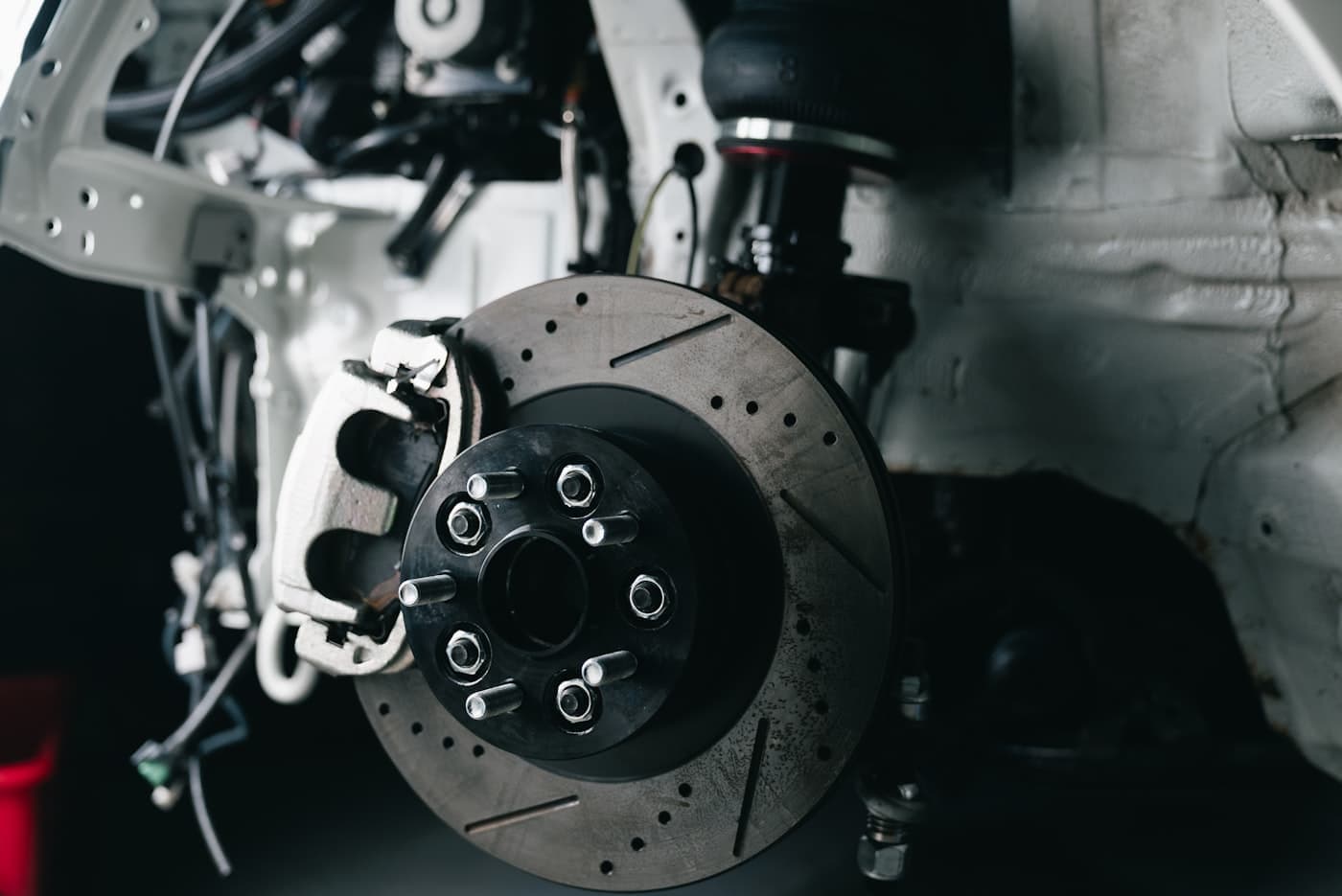
A rhythmic vibration under braking that gets stronger as you brake harder usually means disc thickness variation or runout - the disc is no longer perfectly flat, so pad contact varies through each rotation. It can also come from a worn wheel bearing or a suspension issue presenting the same way, which is why the disc should be measured rather than assumed guilty.
5. The car pulls to one side when braking
Uneven braking force across an axle. The usual cause is a caliper whose slide pins have seized, so one side applies and releases properly and the other does not. It can also be a collapsed flexible hose acting as a one-way valve, or contaminated friction material on one side. All three are worth fixing quickly - a car that pulls under braking is unpredictable in an emergency stop.
6. A burning smell after braking
A sharp chemical smell after a long descent or heavy traffic means the brakes have been running very hot. Sometimes that is simply hard use. Sometimes it is a binding caliper or a partly seized handbrake mechanism dragging continuously, which builds heat even under light braking. If the smell appears during ordinary driving, something is dragging and it needs looking at.
Ask for the measurement, not the opinion
Pad friction material and disc thickness both have manufacturer minimums, and both can be measured in a couple of minutes with the wheel off. When someone tells you your brakes need doing, ask what the measurements were and what the minimum is. A reasonable answer sounds like a number against a number. If you cannot get one, get a second opinion.